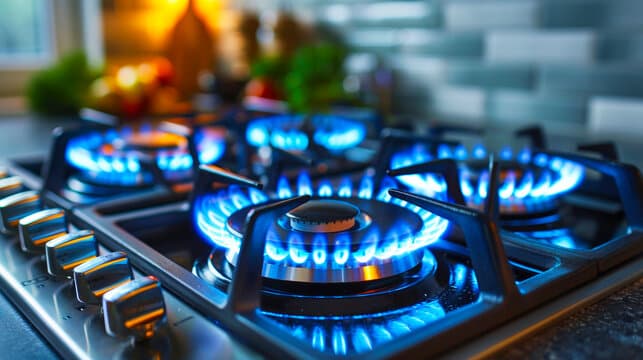
The road to Net Zero by 2050 is paved with ambitious targets, shifting timelines, and significant changes to the UK’s energy infrastructure. For businesses across the country, particularly those heavily reliant on heat, this transition is not just an environmental discussion—it’s a fundamental overhaul of their operating models and a major consideration for future financial stability.
Recent political discussions, particularly those involving the Labour party's energy agenda, have brought the future of natural gas appliances—including both boilers and commercial cookers—into sharp focus. While headlines often use dramatic terms like "ban," the reality for businesses is a more nuanced, but equally urgent, process of phase-out, transition, and, crucially, electrification.
This in-depth guide cuts through the noise to explain exactly what the proposed changes mean for your company, which sectors face the biggest challenges, and the essential steps you must take now to save on business energy costs and ensure operational continuity in the electric future.
1. Setting the Record Straight: Policy, Boilers, and Burners
The confusion often begins with terminology. When discussing the phase-out of gas, the core of the debate usually centres on heating systems (gas boilers), which are responsible for the vast majority of carbon emissions from the built environment.
The Labour Stance: Incentives Over Immediate Bans
While previous governmental plans had set out a timeline to ban the installation of new gas boilers in all homes by 2035, the current political dialogue suggests a softer, incentive-led approach. The Labour party has historically signalled a commitment to decarbonisation but has been cautious about imposing mandatory "rip-out" requirements on existing homeowners or businesses.
Instead of a firm, blanket ban on selling new replacement gas boilers by a set date, the strategy shifts towards two main drivers:
Tightening Efficiency Standards: Future regulations, such as updates to the Future Homes Standard, will demand such high levels of energy efficiency in new and renovated properties that installing a fossil-fuelled boiler simply won't be compliant or practical.
Financial Support and Market Incentives: Significant investment in schemes like the Boiler Upgrade Scheme (BUS) is designed to make low-carbon alternatives, such as air source and ground source heat pumps, financially viable and competitive.
However, even without an outright ban, the direction of travel is unmistakable: gas is being phased out of the UK energy mix. This is where the commercial impact begins, especially when we look beyond heating and focus on high-power gas appliances used for daily operations.
The Hidden Impact: Commercial Gas Appliances
While domestic policy focuses on heating, businesses—especially those in hospitality—rely heavily on gas for cooking and processing. A "gas stove ban" might sound alarmist for a home kitchen, but for a bustling restaurant or industrial bakery, moving away from gas cookers and fryers represents an existential operational challenge. The rising cost of carbon and the increasing cost of gas compared to bulk electricity purchases mean these appliances are the next major target for decarbonisation.
2. The Commercial Kitchen Conundrum: Hospitality and Food Service
No sector is more sensitive to the gas phase-out than the UK's sprawling hospitality industry. From Michelin-starred restaurants to high-street takeaways, commercial kitchens rely on gas for its unique operational benefits.
The Operational Advantages of Gas
Chefs overwhelmingly prefer gas for three critical reasons:
Instantaneous and Precise Control: Gas provides instant heat and allows chefs to adjust the temperature immediately, offering granular control essential for high-quality, high-volume cooking (e.g., wok cooking, rapid boiling).
High-Volume Reliability: Gas appliances are often designed to handle continuous, intense usage during peak service hours without suffering the power limitations or recovery times that some electric systems encounter.
Upfront Cost: Historically, commercial gas cookers and ovens have had a lower purchase price and were significantly cheaper to install in existing buildings compared to the cost of major electrical infrastructure upgrades.
The Cost of Conversion: Upfront Capital and Infrastructure
Transitioning from a gas kitchen to an electric one—primarily using induction technology—is far more complex than a simple appliance swap. This transition presents massive capital expenditure challenges:
New Appliance Costs: Commercial induction hobs, electric combination ovens, and deep fryers are costly.
Infrastructure Overhaul: This is the biggest hurdle. Commercial induction systems draw vast amounts of electricity. Many older, gas-reliant business premises do not have the required electrical supply capacity (measured in Amps) or the necessary three-phase wiring to support a fully electrified kitchen. Upgrading the main incoming supply and internal wiring can escalate costs into the tens of thousands of pounds, requiring coordination with the local Distribution Network Operator (DNO).
Running Costs: While induction is highly efficient (90%+ compared to 40-60% for gas), the current unit price of commercial electricity often dwarfs the price of gas. Businesses must weigh efficiency gains against unit cost volatility. It takes careful calculation to determine if the long-term saving on efficiency offsets the higher current unit rate of electricity.
The Urgent Need to Save on Business Energy:
This is where proactive planning is essential. As businesses electrify, their consumption profile shifts entirely from gas to electricity, meaning every kilowatt-hour of electricity becomes more critical to their bottom line. The only way to mitigate the shock of higher electricity unit rates is to drastically save on business energy through procurement and consumption reduction.
3. Beyond the Kitchen: Other Affected Industries
While hospitality dominates the discussion, the phase-out of industrial gas touches several other sectors that rely on high-intensity heat processes.
A. Manufacturing and Light Industry
Many small to medium-sized enterprises (SMEs) in manufacturing use gas for processes that require intense, controllable heat:
Drying and Curing: Processes in textiles, coatings, and ceramics often use large gas-fired ovens or burners.
Small-Scale Foundries: Though less common in SMEs, some light metalwork still relies on gas furnace heating.
Heat Treatment: Specific component manufacturing requires precise gas burners for annealing or tempering metals.
The shift here involves moving to electric alternatives, such as resistance heating, plasma heating, or heat pumps for lower-temperature drying. The infrastructure challenges (three-phase power, load capacity) are identical to those in commercial kitchens but often on a larger scale.
B. Laundries and Dry Cleaners
Commercial laundries are extremely high-volume users of gas for two primary functions:
Water Heating: Massive quantities of hot water are needed for washing cycles, typically generated by large commercial gas boilers.
Drying: High-speed commercial tumble dryers are overwhelmingly gas-fired because gas is generally faster and cheaper for evaporating large volumes of water.
Electrification means installing large commercial heat pump systems for water and electric dryers, which are often slower and require more capital investment. The continuous high-energy demand makes finding the most competitive electricity tariff paramount.
C. Commercial Offices and Retail
For offices, retail parks, and large commercial units, the impact is primarily on space heating and hot water. The replacement of traditional gas boilers with heat pumps is the key change.
Heat pumps (air-source or ground-source) are incredibly efficient, often producing 3–4 units of heat energy for every 1 unit of electrical energy consumed. However, they require a well-insulated building envelope to perform optimally and need specialist installation.
This transition requires significant capital outlay and often triggers necessary parallel investments in building insulation and glazing to ensure the system is effective.
4. The Electrification Challenge: Rising Costs and Volatility
The biggest financial implication of the gas phase-out is the wholesale shift of business energy expenditure from a dual-fuel (gas and electricity) model to an almost entirely electric model.
The Unit Rate Dilemma
Historically, natural gas has been cheaper per kilowatt-hour (kWh) than electricity, making gas-based heating and cooking fiscally advantageous, despite its lower inherent efficiency.
As businesses transition, their overall electricity consumption will skyrocket. Even with efficient induction hobs and heat pumps, if a business is paying high unit rates for electricity, its overall energy bill could still increase significantly, potentially impacting profitability.
Grid Capacity and the Future of Tariffs
The transition places enormous strain on the UK's electricity grid. National grid upgrades are underway, but local substations and DNO infrastructure may struggle to cope with thousands of businesses suddenly demanding massive new electrical loads. This pressure could affect supply reliability and, critically, influence future pricing structures.
Businesses will increasingly be forced into flexible, time-of-use (ToU) tariffs to help balance the grid. This means electricity used during peak times (e.g., 4 PM to 7 PM) will be penalised with much higher unit rates, while off-peak usage will be cheaper.
For a restaurant, running an electric oven or chilling unit during peak service hours under a ToU tariff could be financially disastrous. Businesses must, therefore, be proactive and strategic:
Invest in Energy Storage: Commercial batteries can charge during cheap, off-peak hours and discharge during expensive peak hours, shielding the business from the highest tariffs.
Shift Non-Essential Load: Industries like laundries and manufacturing can schedule high-draw activities (washing, large machinery) to run overnight or during midday lulls.
5. Taking Action: How to Save on Business Energy Now
The regulatory and market shift is a certainty, even if the timeline is flexible. Businesses cannot afford to wait for a mandatory ban; they must act now to mitigate risk and capitalise on opportunities to save on business energy.
Step 1: Conduct a Comprehensive Business Energy Audit
The first step in any transition should be understanding your current energy profile and the actual energy demand of your processes. An independent business energy audit will identify:
Heat Loss: Where your building is wasting heat (poor insulation, single glazing). Addressing this first means any new heat pump system can be smaller, cheaper to run, and more effective.
Inefficient Gas Appliances: Calculating the consumption of existing gas boilers, ovens, and dryers.
Electrical Infrastructure Readiness: Determining if your current incoming supply (Amps/Phases) can handle the full electrification of your premises without requiring a costly DNO upgrade.
Step 2: Optimise Your Existing Gas Consumption
Even if you plan to switch, your current gas contract is likely running for years. Ensure you are getting the best deal while you still rely on gas. Look for better insulation, install smart controls, and optimise operating temperatures to reduce consumption immediately.
Step 3: Secure the Right Electricity Contract
As your reliance on electricity increases, the contract you hold for power becomes the single most important element of your operating costs. You need a contract tailored to your future, high-volume needs, which likely means moving away from standard fixed-rate tariffs.
This is where an energy broker provides indispensable value. A broker can analyse your projected electric load and negotiate bespoke contracts that factor in:
Long-Term Price Security: Locking in rates for 3–5 years to hedge against market volatility during the transition.
Flexible Procurement: Accessing wholesale market pricing for large consumers.
Renewable Tariffs: Sourcing 100% renewable electricity contracts to align with Net Zero goals and enhance corporate social responsibility (CSR).
Pass-Through vs. Fully Fixed: Understanding the risk associated with non-commodity charges and choosing the contract that offers the most budget certainty.
6. Your Competitive Advantage: Partnering with an Expert Broker
The energy transition is daunting, but it also presents a massive opportunity for forward-thinking businesses to gain a competitive edge. Businesses that proactively invest in efficiency and secure favourable long-term electricity contracts will be far better positioned than those who wait for mandatory deadlines.
Navigating the complexities of commercial heat pump installation, DNO coordination, government grants, and the ever-changing wholesale energy market is a full-time job. It is not something to tackle alone while running your core business.
A specialist business energy broker acts as your essential guide, providing:
Market Insight: Deep knowledge of supplier attitudes toward high-demand electric users.
Contract Negotiation: Leveraging bulk purchasing power to secure rates far below standard published prices, helping you save on business energy.
Holistic Strategy: Integrating your transition plan with your procurement strategy.
If the shift from gas has you concerned about operational costs, rising electricity bills, or infrastructure readiness, the time to act is now.
Don't wait for your current contract to expire or for policy to turn into an enforced deadline. Take control of your energy future today.
We specialise in helping businesses like yours navigate high-demand electrical supply needs and secure market-leading tariffs. To understand your options, assess your future electricity requirements, and find a competitive tariff that helps your business thrive through the energy transition, you need an accurate, personalised assessment.
Ready to future-proof your business and lock in your new power rates?
Get a quote from our expert commercial energy team today. Start the conversation about how to effectively manage your energy costs as the UK moves away from gas. We’ll provide a bespoke comparison of the best electricity and gas deals available on the market, ensuring you are positioned to save on business energy through 2035 and beyond.